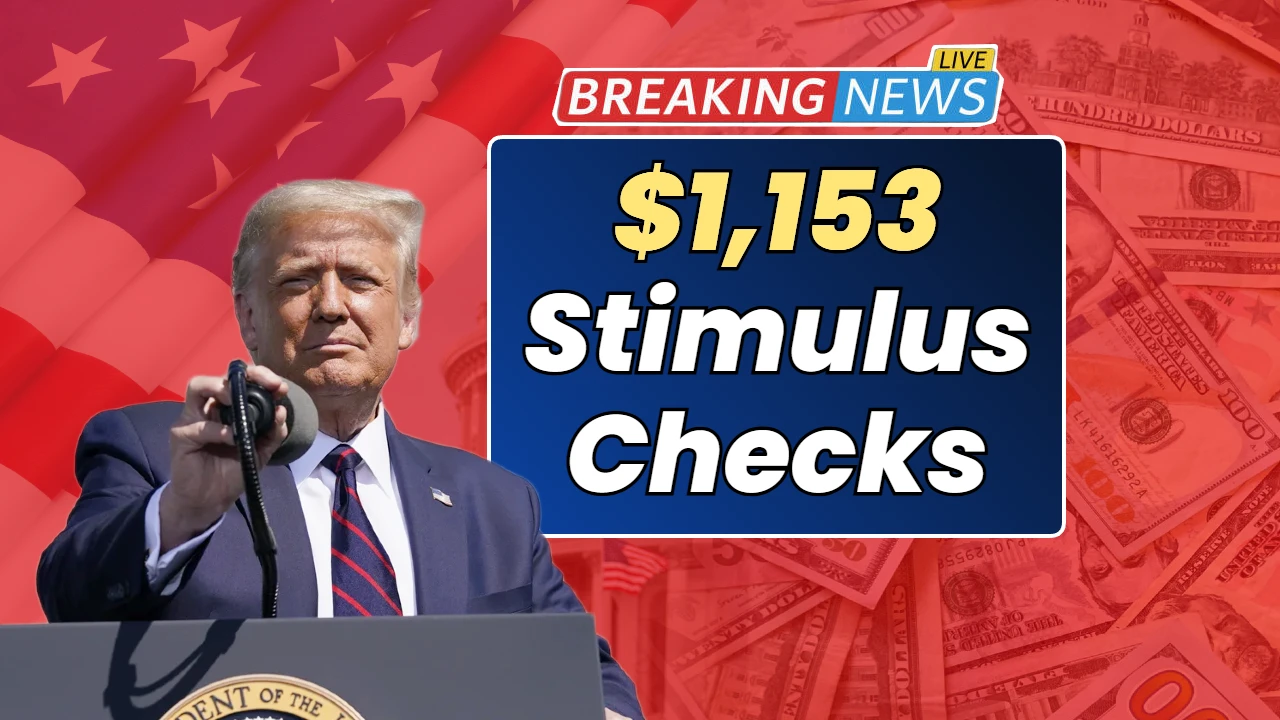
The reporting on $1153 stimulus checks for Americans has again drawn the attention of those families who are influenced by the forces of inflation in the country. Despite not being a universally accepted form of federal money, it focuses on benefits of relief and chances in the form of tax credits to ease the burden of expenditures.
The benefits are also limited by income as well as the filing status of American citizens. It is important to stay up-to-date with all announcements made by the IRS as well as all updates on the same in order to help American citizens plan their budgets during the year 2026 honestly and clearly.
$1153 Stimulus Checks for Americans 2026

News regarding the payments of compensation in the form of $1153 stimulus checks to Americans is also in the limelight, as Americans remain affected because of the rise in the cost of living. But, the payments of $1,153 to Americans as compensation do not comprise any one program sponsored by the federal government.
This benefit explains the background information, qualification eligibility criteria, payment methods, and other vital issues in a clear manner.
$1153 Payment Checks 2026 Overview
| Managing Authority | Internal Revenue Service and State Revenue Departments |
| Program Name | IRS Stimulus Checks / Relief Payments |
| Country | USA |
| Year | 2026 |
| Amount | Average $1,153 |
| Payment Dates | Depends on filing and processing dates |
| Method/Mode | Checks, deposits, prepaid debit card |
| Benefit Type | Federal, State tax credits |
| Category | US Finance |
| Official Website | https://www.irs.gov/ |
Understanding the $1153 Stimulus Checks for Americans
This $1,153 may also be a cumulative amount rather than a single automatic payment. This could include state stimulus payments, inflation relief payments, child-related credits, or earned income tax credits.
These benefits target low to middle-class families who may be struggling against economic pressures. Unlike in previous times when money was distributed without conditioning, this time, there are some targeted and conditional payments in aid of relief for Americans.
Who May Qualify for the $1153 Payments
Eligibility for the $1153 stimulus checks to American citizens requires various financial and individual criteria that apply separately to each program. Not all individuals will get the same amount due to the varying rules of each program.
- The income levels can differ depending on the program considered. However, the main focus is often on low- through middle-class working families.
- Filing status affects benefits entitlement; examples are single, married, and head of household.
- Dependents reported on the tax return may lead to an increase in the amount of any possible refund or payment in the form of a credit.
- Requirements of state residency apply to programs of local funding to provide stimulus or relief from inflation.
- Tax remittance, including proper filing, continues to be required for consideration for payment.
How You’ll Get the $1153 Stimulus Checks
The payment transfer mechanism for stimulus benefits has been similar to that for regular tax refunds or rebates. The IRS, as well as state administrations, have used prior information provided by taxpayers to make secure transfers.
- Direct deposit is the quickest option if accurate banking information is on file with the IRS.
- In case information about direct deposits is not provided, paper checks would be sent to registered addresses.
- Certain state programs can also use prepaid debit cards for controlled distribution.
- Processing timelines are also dependent on Filing dates and verification and administrative procedures.
- Misinformation concerning banking or address information can cause considerable delays in receiving funds.
Difference Between Federal and State-Based Relief

The payment of this federal relief is normally administered by the IRS. The coverage is national. The relief funds provided by states can vary significantly in amount, terms, and time. There are states with relief grants for inflation, while other states provide rebates for energy assistance or family assistance.
The value of $1153 stimulus checks being delivered to Americans is likely a combination of several sources rather than merely being an initiative of one government agency. This is significant as it explains why some neighbours receive different checks.
What You Should Do to Stay Eligible
Americans looking to receive any portion of the $1153 stimulus checks will need to be proactive. Missed deadlines or poorly filed paperwork will result in the loss of benefits.
- File federal tax returns as well as state tax returns even if the levels of income are relatively low.
- Analyse refundable tax credits, including earned income taxes or child-related tax benefits.
- Stay informed about official announcements from the IRS and state departments of revenue.
- Do not use unofficial sites for guaranteed stimulus payments on the Internet.
- And if there is unclear information regarding eligibility, it is best to find qualified tax specialists.
Common Misconceptions to Avoid
A large number of Americans are misled about the fact that these economic stimulus payments worth $1,153 are automatic and universal. The truth is that there are certain criteria that one needs to fulfil.
Another myth is about when payments occur. Such benefits are paid at intervals throughout the year rather than at a national level on a set date.
Getting Your $1153 Stimulus Payment
Stimulus payments of $1,153 to Americans bring into focus the plans to direct relief to targeted individuals instead of the need to inject economic stimulus. Organized planning, on-time filing, and knowledge of the reports from the authorities can still help individuals claim benefits in 2026.
FAQs
Are $1,153 stimulus payments automatically sent out to all recipients?
No, there are eligibility criteria and necessary tax returns to be filed.
Does the amount of $1,153 result from a federal program?
No, it typically packages various benefits of federal and state relief.
Do I qualify for the benefit if I owe taxes?
Yes, refundable credits may apply even if taxes are owed.